Contents
What is the Conversion of Decimal Numbers to Hexadecimal?
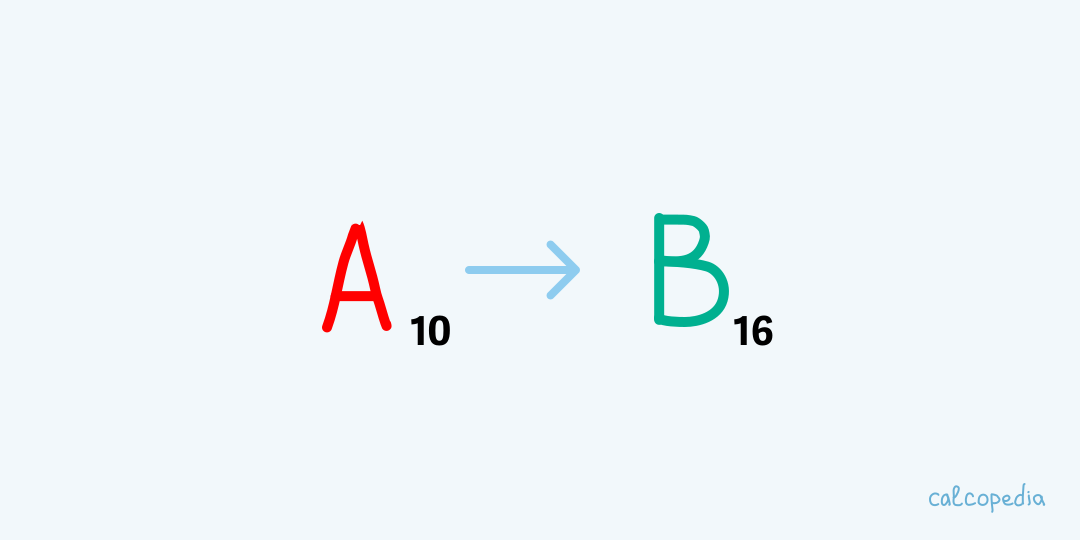
Converting a decimal number to hexadecimal involves changing the number from the decimal system (base 10) to the hexadecimal system (base 16). This is commonly used in computing and digital electronics for a more compact data representation.
The conversion is achieved by dividing the decimal number by 16, recording the remainder, and then repeating the process with the quotient. The hexadecimal number is composed of these remainders, read in reverse order.
This conversion is crucial for programming, data encoding, and in systems where hexadecimal representation simplifies complexity.
How to Use the Decimal to Hexadecimal Conversion?
Using decimal to hexadecimal conversion is integral in digital technologies.
Step 1: Input the decimal number into our calculator.
Step 2: The calculator divides the number by 16 and converts the remainders to hexadecimal format.
Step 3: The final result is a hexadecimal representation of the original decimal number.
Examples of Decimal to Hexadecimal Conversion
Real-life examples of decimal to hexadecimal conversion:
Example 1: Programming where hexadecimal is used for memory addresses or color codes in web design.
Example 2: Simplifying binary codes in computing to a more readable hexadecimal format.
Example 3: Encoding data in systems where hexadecimal provides an optimal balance of readability and data density.
Nuances of Decimal to Hexadecimal Conversion
Important considerations during conversion:
- Accuracy in the division process is vital for correct hexadecimal output.
- Understanding hexadecimal digits, which include numbers 0-9 and letters A-F, is essential.
Frequently Asked Questions
Why is decimal to hexadecimal conversion important in the field of computer science?
Decimal to hexadecimal conversion is essential in computer science for efficient data processing and representation, especially in areas like memory addressing and data encoding.
Can this conversion be used in everyday applications?
While mostly used in technical fields, understanding decimal to hexadecimal conversion can be helpful in everyday applications like understanding error codes in computing devices or configuring network settings.
How does the conversion from decimal to hexadecimal enhance data representation in computing?
Converting from decimal to hexadecimal allows for a more compact and efficient representation of large numbers and binary data, making it easier to read and manipulate in computing processes, such as programming and debugging.
Can learning decimal to hexadecimal conversion improve digital literacy?
Yes, understanding decimal to hexadecimal conversion is key to digital literacy, particularly in fields like computer science, where hexadecimal is commonly used for memory addressing and color coding in digital media.
Is manual conversion of decimal to hexadecimal still relevant with the advent of automated tools?
While automated tools have made manual conversion less necessary in practical applications, understanding the process is still important for foundational knowledge in computer science and digital technology education.
Similar calculators
You may find the following calculators on the same topic useful:
- Octal to Binary Calculator. Effortlessly convert octal numbers to binary format, an essential tool for computing and digital electronics.
- Octal to Decimal Calculator. Simple and quick conversion of octal numbers to decimal format, suitable for computing and mathematical tasks.
- Hexadecimal to Binary Calculator. Quickly and accurately convert hexadecimal numbers to binary format for advanced computing and programming uses.
- Hexadecimal to Decimal Calculator. Rapid and precise conversion of hexadecimal numbers to decimal format, suitable for advanced programming and IT tasks.
- Number System Conversion Calculator. Efficiently convert numbers between binary, decimal, octal, and hexadecimal systems for diverse mathematical and computing applications.
- Gallons to Liters Volume Conversion Calculator. Effortlessly convert liquid volumes from gallons to liters for culinary, scientific, or general use.
- Liters to Gallons Volume Conversion Calculator. Accurately convert liquid volumes from liters to gallons for culinary, scientific, or everyday purposes.
- Inches to Centimeters Length Conversion Calculator. Accurately convert inches to centimeters for various applications in construction, crafting, and everyday measurements.
- Centimeters to Inches Length Conversion Calculator. Quickly and precisely convert centimeters to inches for use in various fields like construction, crafting, and daily life.
- Inches to Millimeters Length Conversion Calculator. Efficiently convert inches to millimeters for precision in engineering, crafting, and other measurement-sensitive tasks.
Share on social media
If you liked it, please share the calculator on your social media platforms. It`s easy for you and beneficial for the project`s promotion. Thank you!